
Mosamia Art
Leopard in the Thicket
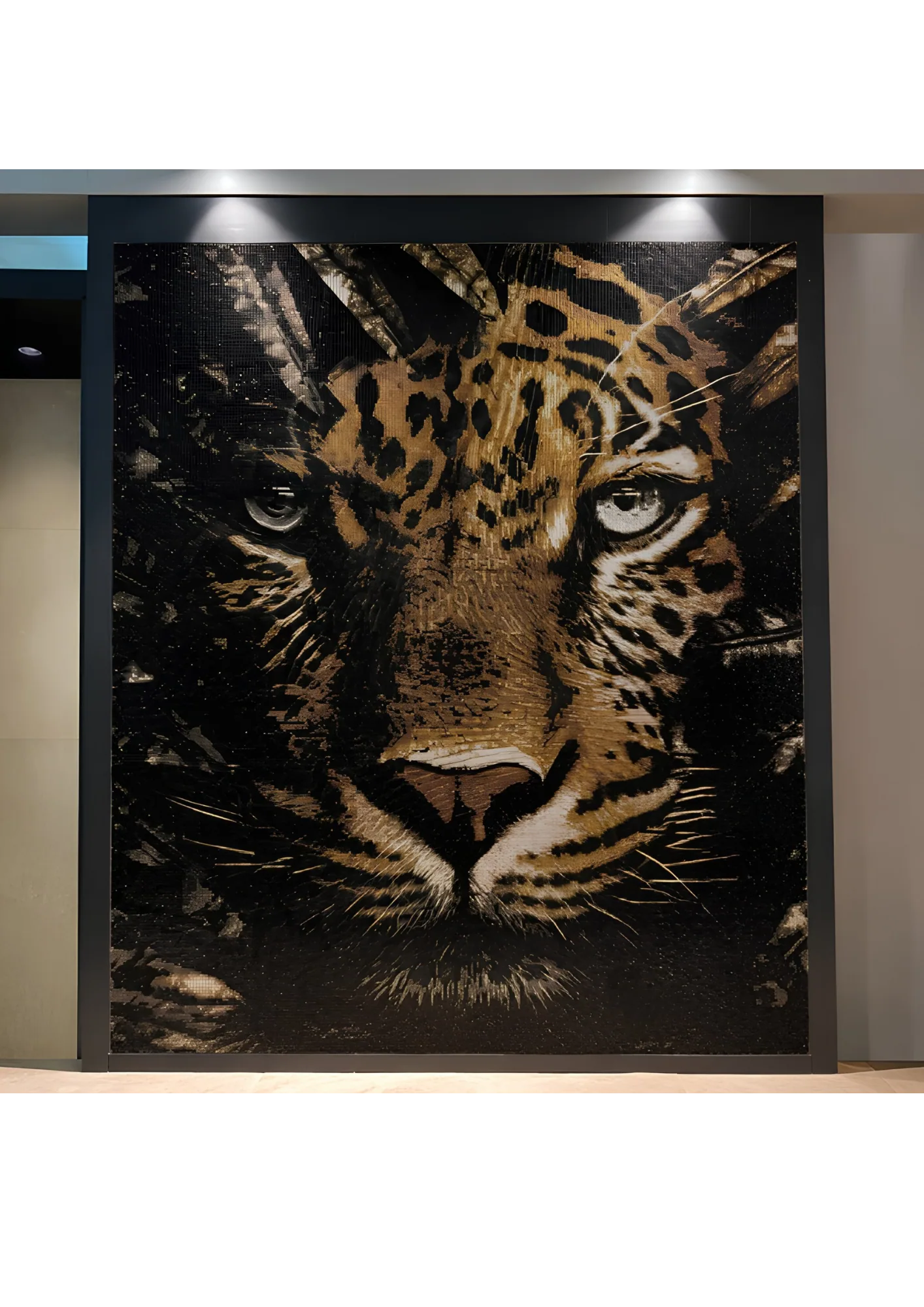
A leopard at 310 cm × 375 cm, built from cream, ochre and rust tesserae against a field of near-black stone.
- Size
- 310 cm × 375 cm (122 in × 147.6 in)
- Tesserae
- 1 cm × 1 cm natural stone
- Module
- 31.2 cm × 31.2 cm
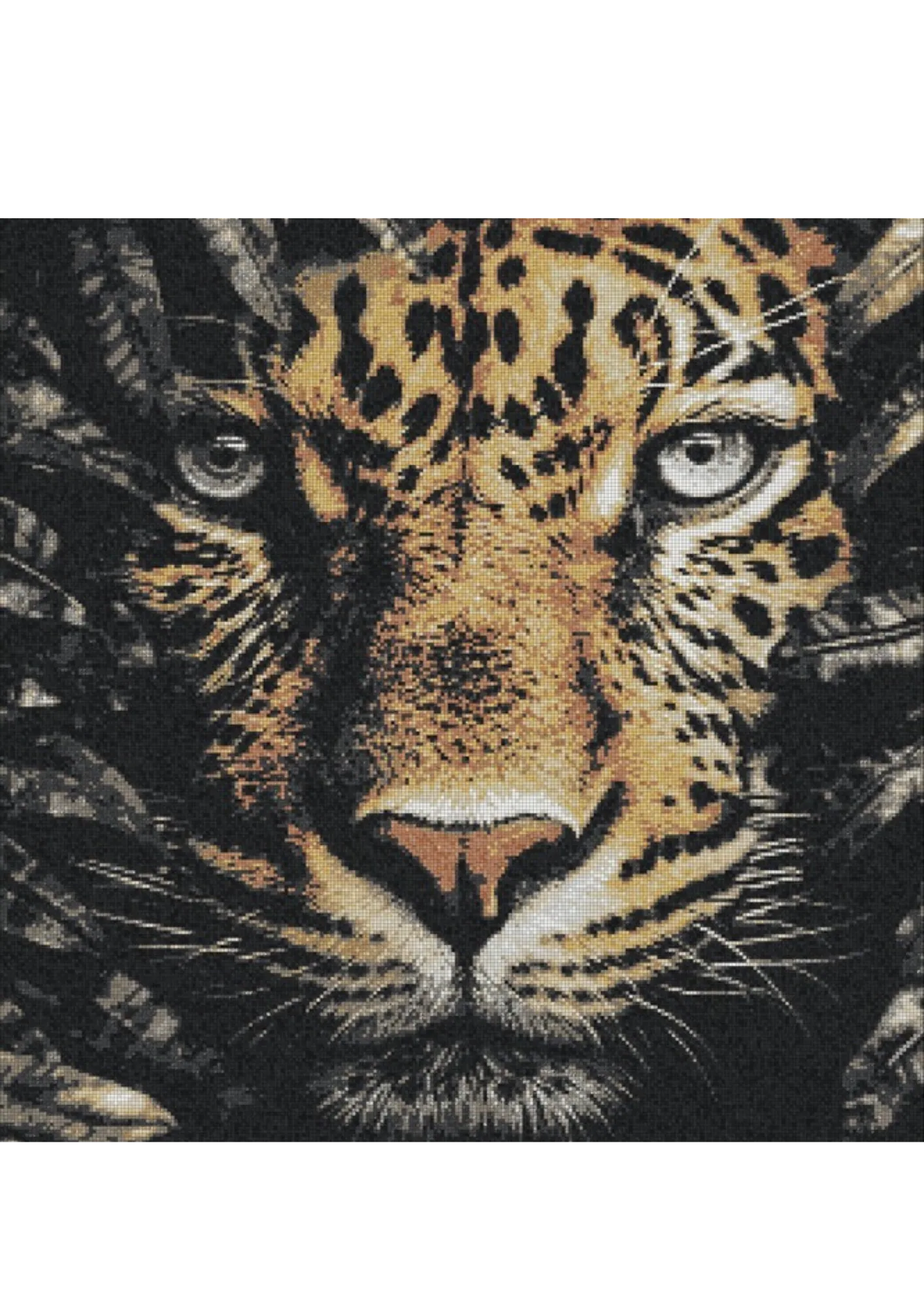
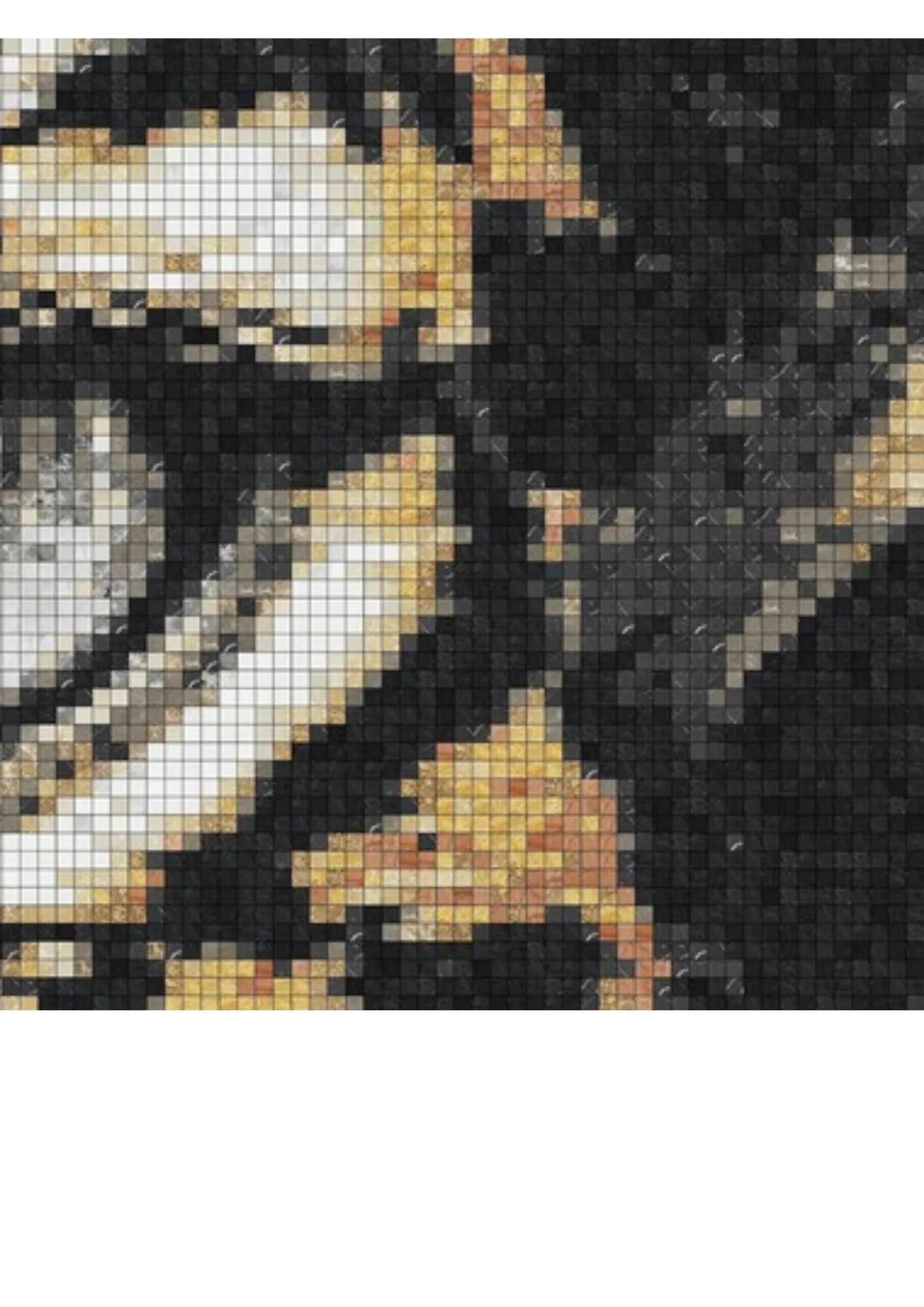
Every piece starts as a simulation, so you can see how your image breaks into 1 cm × 1 cm micro-mosaics before a single stone is cut.
About the piece
Almost every change of tone here is a change of material rather than a change of colour — amber and rust through the face, near-black marble holding the foliage. That is why the dark stays dark under a spotlight instead of washing out.
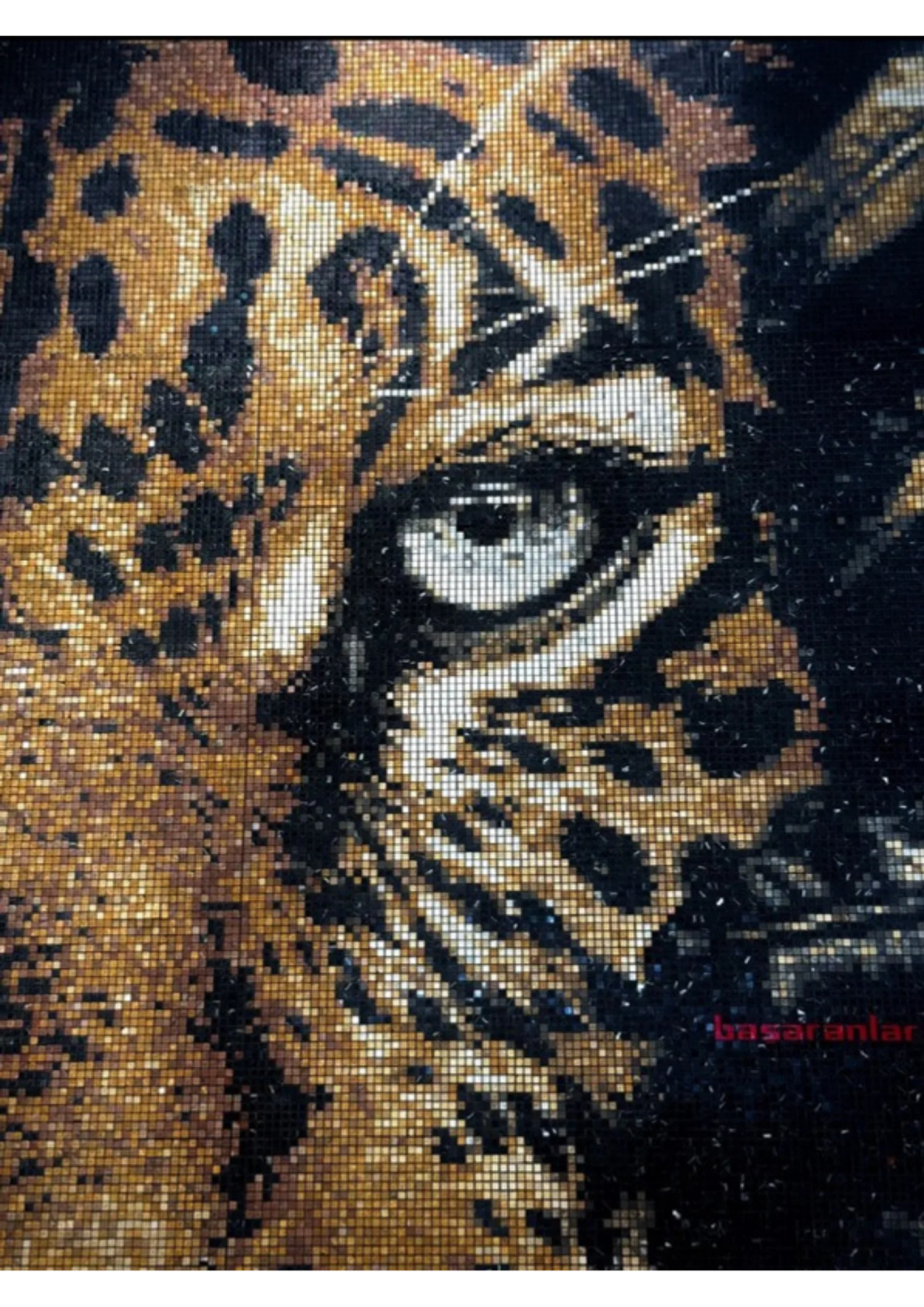
The close photograph is the honest one. You can see the relief at the joints and each piece catching the light at its own angle, which is the real difference between a natural stone mosaic and a printed panel. It is also why the work keeps changing as you walk past it.
If you are thinking about one
Send us an image — a photograph, a painting, a drawing, whatever you have. We will tell you the smallest size it can be made at and still read properly, show you the simulation, and quote from there. Custom design work usually runs three to four weeks in production, and the piece ships as numbered 31.2 cm modules with a layout guide, which is what keeps the installation simple at the other end.
Next project
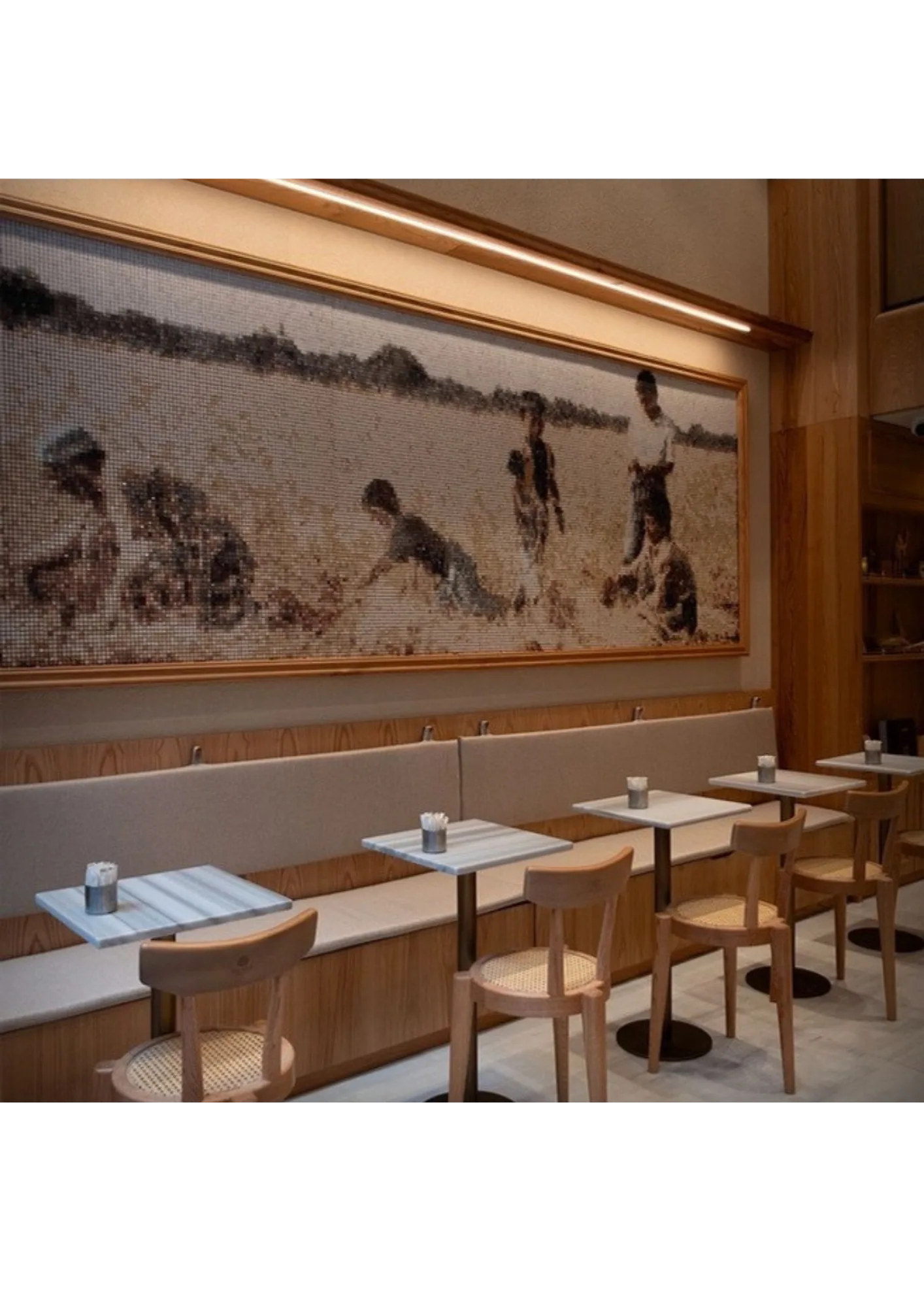
Figures in an Open Landscape